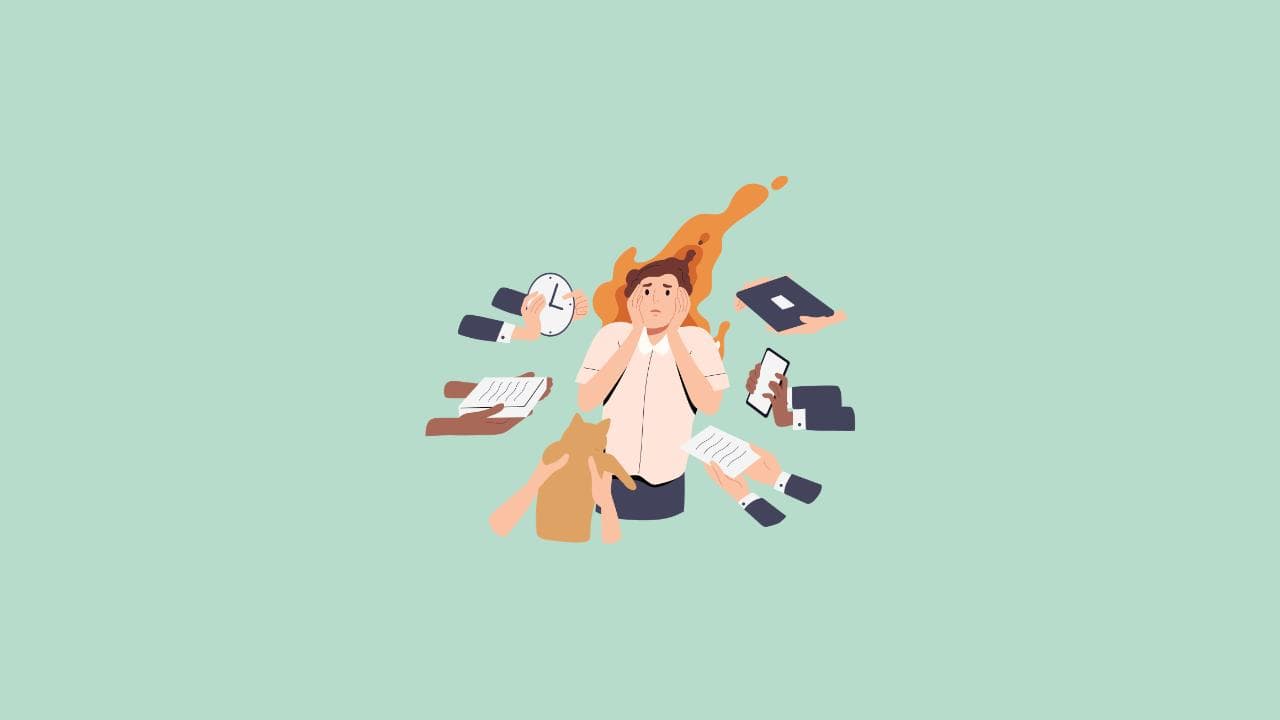
Why Do I Feel So Anxious When I'm Not Doing Anything? The Science of Rest Anxiety
Why Do I Feel So Anxious When I'm Not Doing Anything?
You've been busy all day. You finally sit down. And instead of relief — a wave of anxiety washes over you.
Or you lie in bed at night, exhausted, and your mind starts spinning. Or you're on holiday, supposed to be relaxing, and the anxiety is worse than it ever is at work.
If this sounds familiar, you're not unusual. Many people with anxiety find that rest doesn't quiet the nervous system — it amplifies it. Here's why, and what to do about it.
The "Busyness as Avoidance" Mechanism
One of the most common reasons anxiety intensifies in stillness is that activity is functioning as avoidance.
When you're busy — checking tasks off a list, responding to emails, doing the dishes, driving somewhere — your mind has an object. Busyness provides the brain with something to process, which keeps it from turning inward.
The moment you stop and do nothing, all of the thoughts and feelings you've been outrunning have nowhere else to go. They surface. The anxiety you've been keeping at bay by staying in motion arrives with full force.
This is why some people become addicted to busyness — not because they love the tasks, but because stopping is worse. Staying busy has become a coping mechanism, and like most coping mechanisms, it works in the short term and makes things worse in the long term.
The Default Mode Network
There is a neurological basis for this experience. The brain has what's called the Default Mode Network (DMN) — a set of interconnected brain regions that become active when you're not focused on an external task. It's what activates when you daydream, remember the past, or imagine the future.
In anxious people, the DMN tends to produce ruminative, threat-focused thought patterns rather than creative or neutral mind-wandering. So when you stop doing anything, the brain doesn't gently meander — it goes straight to worries, regrets, worst-case scenarios, and unresolved fears.
The brain isn't broken. It's defaulting to what it's been trained to do. But it means that rest, for anxious people, often requires more active management than it does for less anxious people.
Cortisol and the Afternoon/Evening Dip
There's also a biochemical element. Cortisol (the stress hormone) naturally peaks in the morning and declines through the day. For people with anxiety disorders, cortisol dysregulation is common.
This can mean:
- Morning anxiety — waking with a sense of dread, racing heart, or immediately active worry
- Evening anxiety — as the day's distractions fall away, cortisol levels are lower but unprocessed stress accumulates
- Weekend or holiday anxiety — when the structure that normally manages cortisol is removed
This is why many people report their anxiety being worst first thing in the morning and last thing at night — exactly when they're most inactive.
The "What If I'm Missing Something?" State
For people whose anxiety has a perfectionistic or hypervigilant quality, doing nothing generates a specific kind of unease: the feeling that they should be doing something. That resting is a form of falling behind. That if they're not actively monitoring and managing their world, something will go wrong.
This is sometimes called anticipatory anxiety — a chronic, low-level state of scanning for future threat. Rest doesn't feel safe because rest equals lowered vigilance, and lowered vigilance (the anxious brain believes) equals vulnerability.
Interoception: Why Your Body Feels Louder When Quiet
Interoception is your awareness of sensations inside your body — heartbeat, breathing, gut feelings, temperature. When you're busy, external stimuli compete for your attention. When you're still and quiet, your body becomes the loudest thing in the room.
Many people with anxiety are also high in interoceptive sensitivity — meaning they notice every bodily sensation acutely. So stillness doesn't just bring anxious thoughts: it brings awareness of your heartbeat (is it beating too fast?), your breathing (does it feel shallow?), sensations in your chest or stomach (what does that mean?). This feeds the anxiety spiral.
What This Isn't
It's worth being clear: feeling anxious at rest is not laziness, weakness, or ingratitude. It is not evidence that you don't know how to relax. It is not a personality flaw.
It is a common feature of anxiety that has neurological, biochemical, and psychological roots.
What Actually Helps
Active Rest Instead of Passive Rest
For anxious people, "do nothing" is often not rest — it's exposure to anxiety without tools. Active rest — activities that provide gentle occupation without demand — tends to work better. This includes: walking without a destination, listening to music, cooking something simple, gentle stretching, drawing, reading fiction.
Scheduled Worry Time
CBT therapists often recommend designating a specific 20-minute window each day for worry — and when anxious thoughts arise outside that window, briefly noting them and redirecting. This reduces the pressure of unstructured rest because worries have a designated place to go.
Breathing and Physiological Downregulation
Slow, extended exhales activate the parasympathetic nervous system. A 4-7-8 breath (inhale for 4, hold for 7, exhale for 8) or simple extended exhales can begin to chemically shift the anxious state. This takes practice, but it works with the body rather than against it.
Body Scanning Without Catastrophising
Rather than trying to ignore bodily sensations, a non-judgmental body scan — noticing each sensation with curiosity rather than alarm — can reduce the anxiety that comes from noticing a sensation and immediately evaluating it as dangerous.
Reducing the "Guilt Tax" on Rest
For many anxious people, the distress of rest is amplified by the belief that they shouldn't feel anxious when resting. Accepting that rest-anxiety is a real and common phenomenon — rather than a sign that you're doing rest wrong — reduces one layer of the distress.
When to Seek Help
If anxiety at rest is significantly affecting your sleep, your ability to take breaks, your enjoyment of leisure time, or your relationships — it's worth speaking to a therapist.
Rest anxiety responds well to CBT, Acceptance and Commitment Therapy (ACT), and nervous system regulation approaches like somatic therapy and mindfulness-based interventions.
At ApprovedTherapists.com, you can browse therapists who work with anxiety across a range of modalities. We are a therapist directory — we do not verify or endorse individual practitioners listed on the site — so please take time to review profiles and qualifications before reaching out.
Key Takeaways
- Anxiety at rest is common and has clear neurological, biochemical, and psychological causes.
- Busyness often functions as avoidance — the moment activity stops, avoided anxiety surfaces.
- The brain's Default Mode Network tends toward ruminative worry in anxious people during unstructured time.
- "Active rest" — gentle, low-demand activity — often works better than passive doing-nothing for anxious people.
- This pattern is very treatable with the right therapeutic support.
This article is for educational purposes and is not a substitute for professional mental health advice.